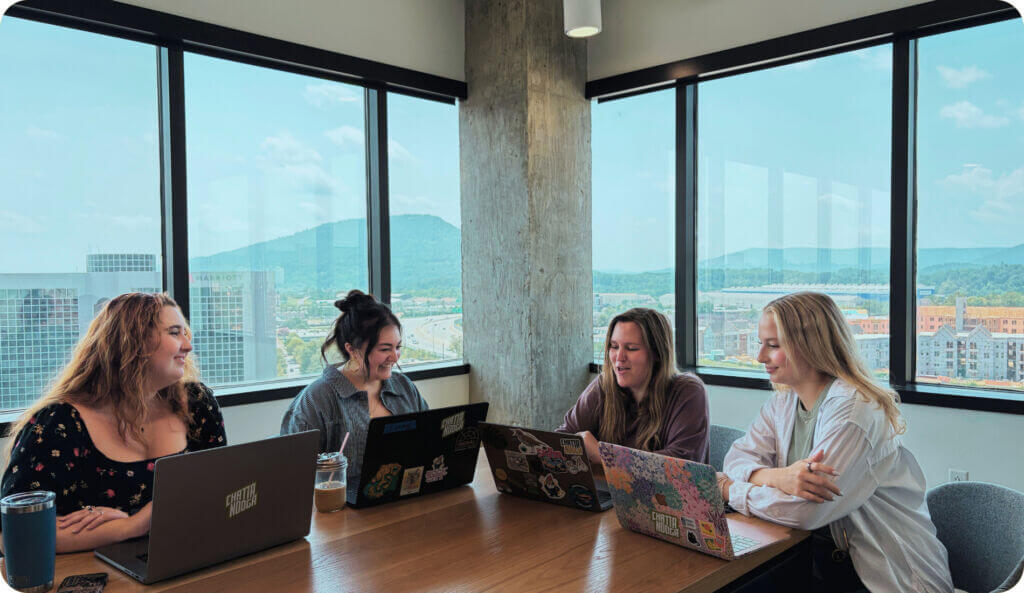
Picture this, you know a great photo or video exists somewhere in the organization, but finding it means searching through drives, inboxes, and finally messaging the one person who ‘knows where everything is,’ then waiting. Sound familiar? The Visit Chattanooga team built a workflow to fix this.
Nearly 20 people across their organization, from sales to events to visitor services to PR, use CrowdRiff’s Digital Asset Library to find and add visuals of their own. A sales rep pulls a venue photo for a conference pitch. The events team grabs a shot of a ballroom set for 100 guests. Someone on the PR team builds a quick folder for a reporter on deadline. They make it work by getting people across the org into the habit of uploading, giving the library just enough organization to stay findable, and trusting the team with access instead of routing everything through a gatekeeper.
Managing with No Dedicated Social Media Person
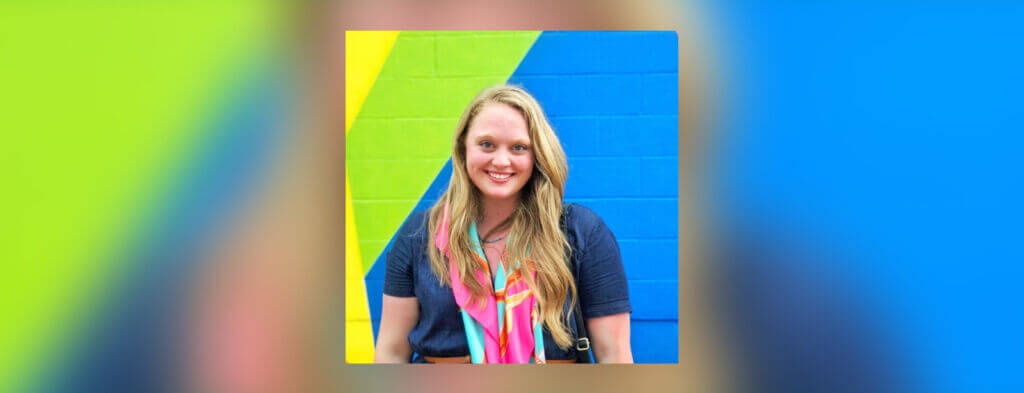
Sarah Joyner is Director of Content for Visit Chattanooga, overseeing the website, email marketing, creative services, and the destination’s social channels. Social runs as a joint effort between her content team and their marketing agency, Miles Partnership. “Making sure that we have everything in one place, and can actually find it and pull for all of our content, is really important,” she says. “Social media is really important for DMOs, and for us.”
Keeping that running smoothly comes down to having a well-organized Library the whole team can actually use together.
No More Bottleneck
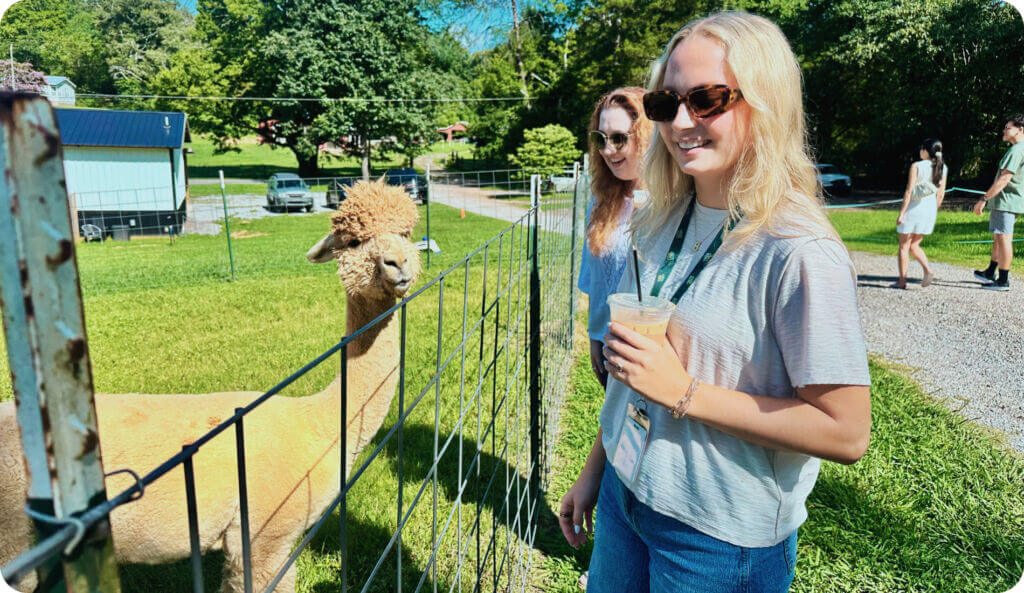
Giving every department direct access to the Library, instead of routing every request through Sarah, has freed up her time for other work. “I’m not having to go in there and find all of that content for them,” she says. Every request that used to land on her desk now gets self-served. Sales pulls up venue shots to pitch a conference. Visitor services grabs what a meeting space looks like set up for a hundred guests. Neither has to loop Sarah in to get there.
That only works if people can actually find what they need. CrowdRiff helps with that through AI search by description, location, author, and keyword tags. There’s really only one rule the team follows: every upload gets a location tag and keywords. “We gave suggestions to think about who, what, when, where, and season,” Sarah says, “so that anyone in the future who might need this image or video is going to be able to search and find it.” With that in place, the team can easily find content by describing what they need rather than searching through folders. Folders themselves stay loose. “I feel like I’m opening up the closet in my house that no one should ever see the inside of,” Sarah jokes, describing how their shared folder structure has just grown organically over the years rather than following any strict system.
This process has been formalized into a one-page reference guide, and new hires get walked through it when they join.
Everyone’s a Content Contributor
Being able to find things is only half the story. Visit Chattanooga also got their whole team contributing to the library, not just searching it. It started at an all-staff meeting, when a QR code linked to a CrowdRiff Collector was shared and everyone was asked to submit one photo or video from a recent weekend exploring the city. This was framed as a fun icebreaker, not a work task, and it showed the team how easy uploading could be.
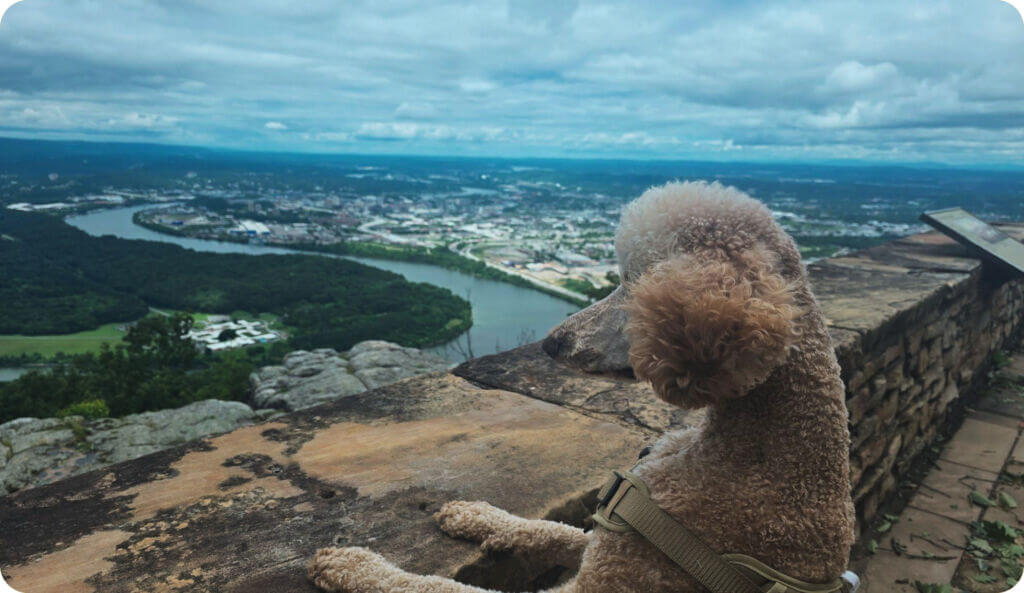
An events team member became Sarah’s “CrowdRiff ambassador” after she started sending in photos of her dog. (A good chunk of Visit Chattanooga’s dog-friendly content traces back to her.) The team has embraced it, and everyone’s always sourcing content now. “Some of the folks on my team just went to lunch at a new place that had opened up in Chattanooga,” Sarah says. “They were like, we’ve got to go get some content from there. I’d say the majority are uploading from their phones, getting that live content while they’re there.”
Most day-to-day uploads now come straight from people’s phones. In the last 90 days alone, the team uploaded more than 4,600 new assets to the library, a scale that would be hard to hit if it all still ran through one person. “I noticed, especially when you have so many people uploading, that we’re finding so much more content than we realized we had,” Sarah says.
Collectors as a Sourcing Pipeline
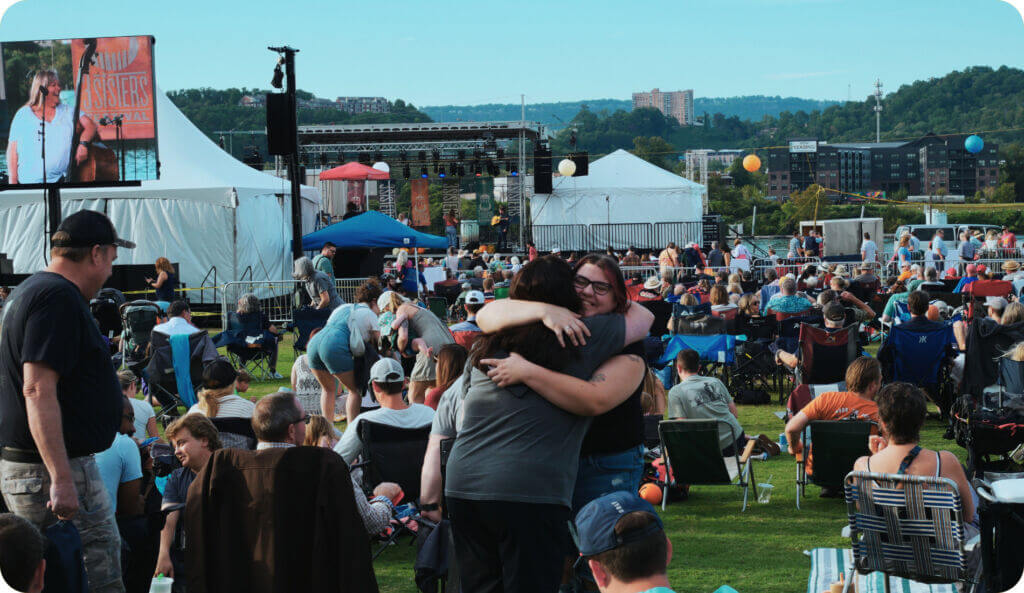
For years, Visit Chattanooga has partnered with a local university communications class built specifically to source content for the destination. It started because the team needed better coverage of local music venues, and it grew from there. Students are encouraged to snap photos and upload them through a Collector, and Sarah’s team combs through what comes in, pulling the best of it into the Library. Someone still has to add keywords and locations and file everything where it belongs before it’s actually usable, a manual step behind every Collector link that Visit Chattanooga shares. Still, it’s a lot less work than sourcing all that content themselves.
This program brings in a variety of perspectives and experiences. One student in the class, who uses a wheelchair, shared her first-person point of view of the city’s attractions that Visit Chattanooga hadn’t had before, filming what local spaces looked like through her own experience. “It was really a great benefit to us,” Sarah says, “and I was so grateful that we were able to have that.”
Sharing With Partners, Made Easy
Ava, Visit Chattanooga’s PR manager, gets requests from reporters in need of specific attraction photos, and they need them now. Instead of digging through the whole library, she builds a folder on the spot and shares just that. Since CrowdRiff lets her add assets to a new folder without pulling them out of wherever they already live, nobody else is affected. She can also set permissions so the reporter only sees that one folder, nothing else. For anything less urgent, Visit Chattanooga also keeps a Media Hub live, a curated, standing version of the Library that media and partners can browse and download from on their own, no folder request required.
Local businesses submit their own photos too, through a Collector, and Sarah’s team manages what comes in. “I’ve hopped in before and there’s 200 new assets,” she says. “The partners are really on top of things.” Other partners come with their own rules about how their images can be used, and Sarah keeps track of those requirements right in the Library’s licensing fields, so everything shared carries the right credit.
Tips for Building Out Your DAM
- Start wherever you are. If you’re moving off Google Drive, Dropbox, or a pile of hard drives, CrowdRiff handles the migration for free and helps organize what’s already there. You don’t need a clean library before you begin.
- Open up access. Visit Chattanooga gave every department direct entry to the Library instead of routing every request through one person.
- Make contributing easy. A five-minute all-staff activity, a QR code and a simple ask, got the whole team into the habit of uploading.
- Bring in your partners. Visit Chattanooga collects content from local businesses and a university class through Collectors. They share it back out through the Media Hub and quick, permissioned folders for partners and press.
- Creators can help build out your library. Visit Chattanooga runs up to 50 professional shoots a year, content that’s ended up doing double duty everywhere, fueling a reel for The Reading Room that pulled 730,000 views on TikTok, and filling a media wall in their own info center that visitors stop for.
“Just always be sourcing for your DAM. Bring up that QR code at any coffee meeting you’re in.”
Thank you Sarah for sharing your story with us!